
If you’ve ever hired a developer to build your website and a separate SEO specialist to make it rank, you’ve probably run into the same wall most businesses do: nobody actually owns the outcome.
The developer ships a site that looks great in the portfolio. The SEO specialist inherits it, runs an audit, and starts working around whatever decisions were already baked into the build. When rankings don’t move, each side can point at the other — the code, the content, the “algorithm.” Nothing gets fixed, because nothing was ever built to work together in the first place.
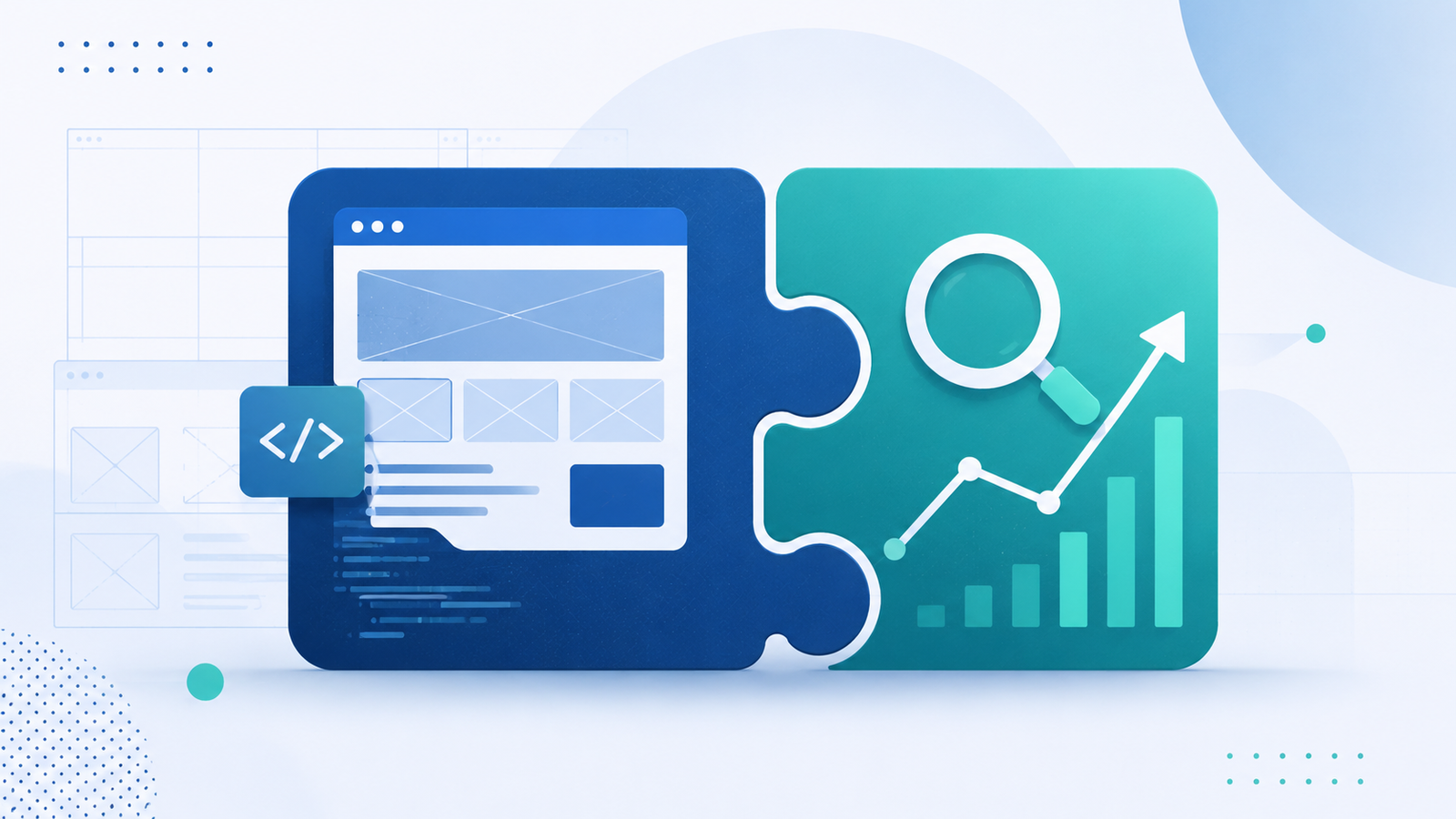
I don’t work that way. I treat SEO and WordPress development as the same problem viewed from two different angles, and I build both from day one.
The Core Problem: A Split That Was Never Supposed to Happen
Here’s the uncomfortable truth about most WordPress projects:
- A technically flawless SEO strategy fails on a slow, poorly structured website. You can write perfect meta titles and build a flawless keyword map, but if the site takes six seconds to load or buries key pages four clicks deep, none of it matters.
- A beautiful WordPress website is worthless if it never ranks. Clean design, smooth animations, and a polished Elementor build mean nothing if the site is invisible in search results and nobody ever sees it.
These aren’t two separate failures. They’re the same failure, described from two different job titles. And the reason it keeps happening is structural: most agencies and freelancers hire a developer to build and a strategist to optimize, as two disconnected line items. Each one does their job well in isolation — and the site still underperforms.
What Building SEO and Development Together Actually Looks Like
This isn’t a slogan. In practice, treating SEO and development as one system means specific, concrete decisions get made differently from the very first wireframe:
1. Site architecture built for crawlability, not just aesthetics
Every navigation decision, URL structure, and internal linking pattern is planned around how search engines discover and understand content — not just how a page looks in the builder preview.
2. Page speed treated as an SEO metric, not an afterthought
Speed isn’t something bolted on after the design is “done.” Image handling, plugin choices, hosting considerations, and Core Web Vitals are part of the build decisions from the start, because page speed is a ranking factor, not a nice-to-have.
3. On-page and technical SEO baked into the build
Title tags, header hierarchy, schema markup, and internal linking structure are part of the development process — not a checklist someone runs through after launch and tries to retrofit into finished templates.
4. WooCommerce and Elementor builds that convert and get found
For ecommerce and service businesses, the build has to do two jobs simultaneously: turn visitors into customers, and be structured well enough for those visitors to find the site in the first place. Product pages, category structures, and checkout flows are built with both conversion and search visibility in mind.
Why “Two Specialists” Usually Means “No Owner”
Most businesses end up with a developer who builds something visually strong, and an SEO who optimizes around whatever they were handed. Both can be genuinely skilled at their individual craft. The gap isn’t talent — it’s ownership.
When design, development, and search visibility sit under one person or one process, there’s no handoff where things get lost in translation. Nothing gets built first and “SEO’d later.” There’s no finger-pointing between departments when a launch underperforms, because there’s one point of accountability for the whole outcome — not just the parts of it that fall inside a narrow job description.
That’s the model I operate on for every WordPress and WooCommerce project I take on, including the white-label work I deliver for digital marketing agencies that need this handled end-to-end without adding headcount.
Where the Real Problem Usually Hides
If your website looks great but isn’t generating traffic, or you’re paying for SEO on a site that’s quietly working against you, that gap is almost always where the real issue lives — not in the individual quality of the design or the individual quality of the SEO work, but in the seam between them.
I’ve seen it from both directions:
- Good SEO, undone by the website. A site with real keyword opportunity and solid content strategy, sitting on a slow theme, bloated plugin stack, or a URL structure that fights against everything the SEO strategy is trying to accomplish.
- Good website, undone by the SEO — or the lack of it. A polished, fast, well-designed site that was never structured for search from the start, so it launches beautiful and invisible, and “SEO” becomes an expensive rescue mission months later.
Either direction, the fix is the same: stop treating design, development, and search visibility as separate deliverables, and start treating them as one build.
A website’s job isn’t just to exist — it’s to be found, and to convert the people who find it. That only happens reliably when the person building it and the person optimizing it for search are the same accountable party, working from the same plan, from day one.
That’s the foundation I build every project on: design, development, and search visibility owned end to end, so nothing gets lost in the handoff.
Let’s get in touch to rank your business organically from the start!
