Italian Restaurant Website SEO Case Study (6-Months Report)
Showcasing Giovanni’s SEO Project
Project summary
Overview
It is an italian restaurant business whose website serves as its primary digital storefront — the place prospective diners go to check the menu, confirm hours and location, and decide whether to book a table. Like most independent restaurant sites, its success depends less on transactional e-commerce and more on local discoverability: showing up when nearby diners search for “Italian steakhouse near me,” a specific dish, or the restaurant by name.
Saad Shoukat was engaged to run a full-cycle SEO campaign for the site, covering technical health, on-page optimization, and search visibility, with the objective of turning Google Search into a reliable channel for new diners rather than an afterthought.
SEO objectives for the engagement:
1. Establish measurable, trackable organic search performance where little to none previously existed.
2. Improve the site’s visibility for restaurant- and location-relevant search queries.
3. Lift click-through rate by improving how the site appears in search results.
4. Move average keyword rankings into a competitive range (page 1–2) that diners actually reach.
5. Initial challenges and business goals are covered in the next section.
Client Challenges
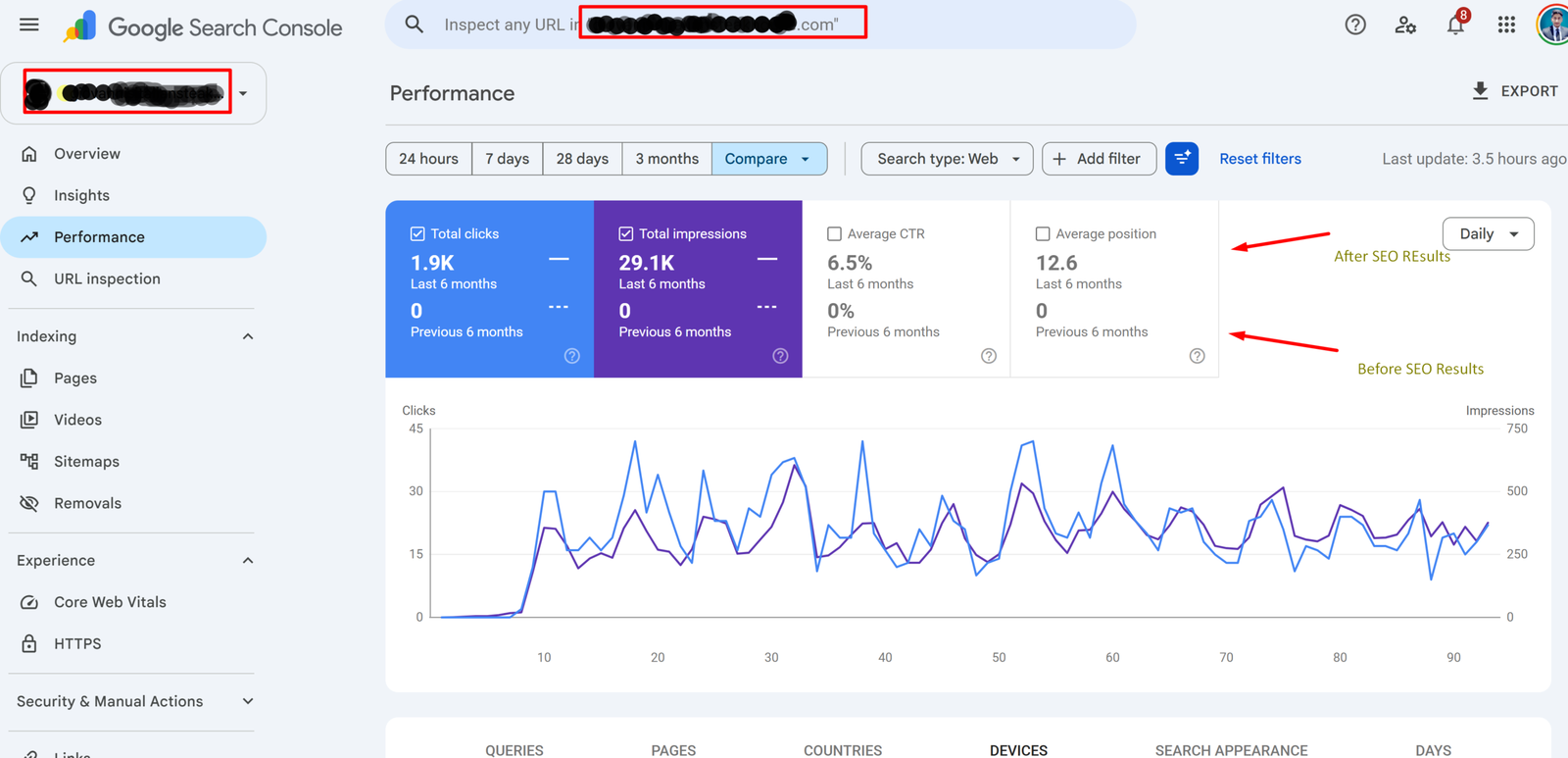
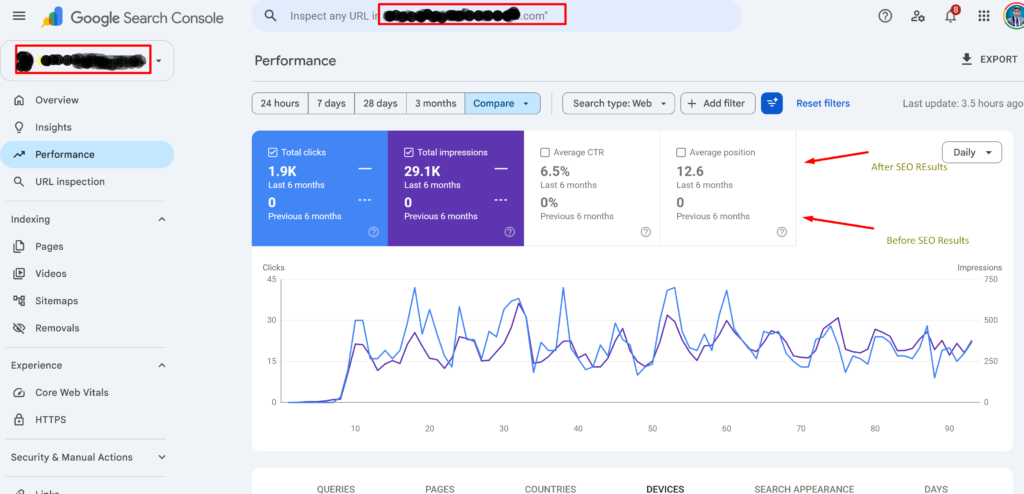
At the start of the engagement, Google Search Console showed no recorded search performance for the site’s tracked six-month baseline period — zero clicks, zero impressions, 0% CTR, and no meaningful average position data (see the note on data interpretation in Section 5). In practice, this reflects one of two common starting points for independent restaurant sites, and often both at once:
1. The site had little to no organic search visibility before the campaign — it wasn’t ranking for the queries diners actually use.
2. Search performance simply wasn’t being tracked or reported on prior to this engagement, which is itself a common gap for small hospitality businesses that have never had SEO support.
Common contributing issues for restaurant sites in this position typically include (reasonable assumptions, consistent with the scope of this engagement):
1. Weak or missing on-page SEO fundamentals — titles, meta descriptions, and headings not aligned to how customers search.
2. Limited or unoptimized local SEO signals, making it harder to compete for “near me” and location-based searches.
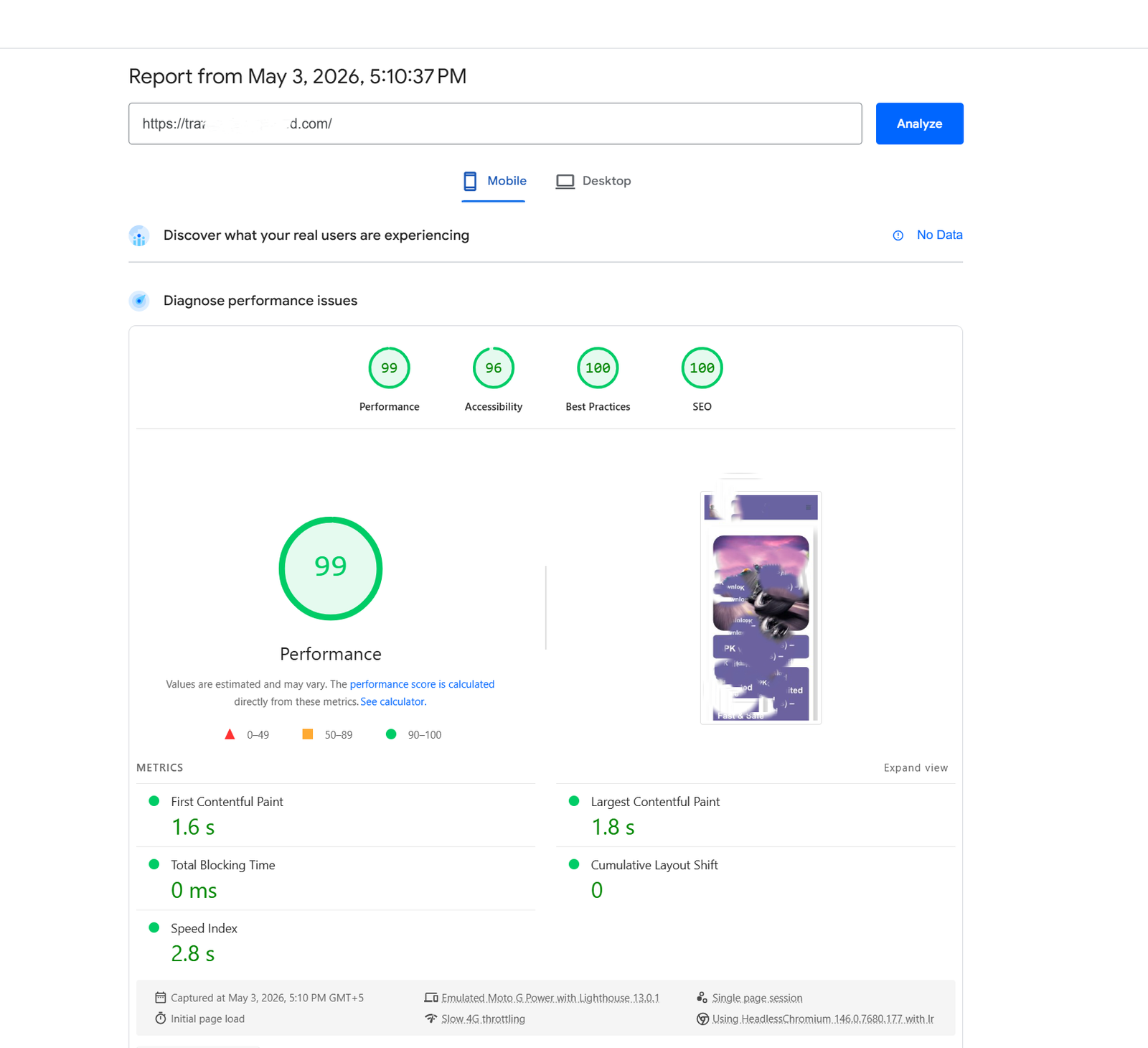
3. Technical SEO gaps (indexing, crawlability, or Core Web Vitals) limiting how much of the site Google could surface.
4. Low click-through rate potential, since unoptimized listings rarely stand out against competitor restaurants in search results.
5. Limited online discoverability translating into fewer website visits, calls, and reservation inquiries.
SEO Strategy
The attached report confirms search performance outcomes but does not itemize each individual tactic performed. The strategy below reflects the standard scope of Saad’s restaurant SEO engagements; items are labeled accordingly so verified results are never confused with assumed activities.
1. Technical SEO: crawlability, indexation checks, sitemap and robots.txt configuration, Core Web Vitals review.
2. On-page SEO: title tags, meta descriptions, header structure, and content aligned to real search intent.
3. Keyword research: identifying restaurant-, cuisine-, and location-specific search terms with real diner intent.
4. Local SEO: Google Business Profile optimization, NAP consistency, and location-based landing page elements.
5. Internal linking: connecting menu, location, and booking pages to strengthen crawl paths and relevance.
6. Schema markup: structured data for restaurant, menu, and review information to improve rich-result eligibility.
7. Image optimization: compressed, properly-labeled imagery to support both page speed and image search visibility.
8. Mobile optimization: ensuring the experience holds up for the mobile-first, near-me searches restaurants rely on.
9. Metadata and URL optimization: clean, descriptive, keyword-aligned URLs and snippets to lift click-through rate.
Implementation Process
Months 1–2: Foundation
1. Technical and on-page audit; indexing and crawlability fixes.
2. Keyword research focused on restaurant, cuisine, and local intent.
3. Google Search Console and tracking set up or corrected, establishing the baseline reflected in this report.
Months 3–4: On-Page & Local Optimization
1. Title tags, meta descriptions, and headings rewritten around target keywords.
2. Google Business Profile and local SEO elements optimized.
3. Schema markup and image optimization implemented.
Months 5–6: Refinement & Scaling
1. Ongoing monitoring of click, impression, and ranking trends.
2. Iterative improvements based on which pages and queries were gaining traction.
3. Consolidation of gains heading into the reporting period..
Results
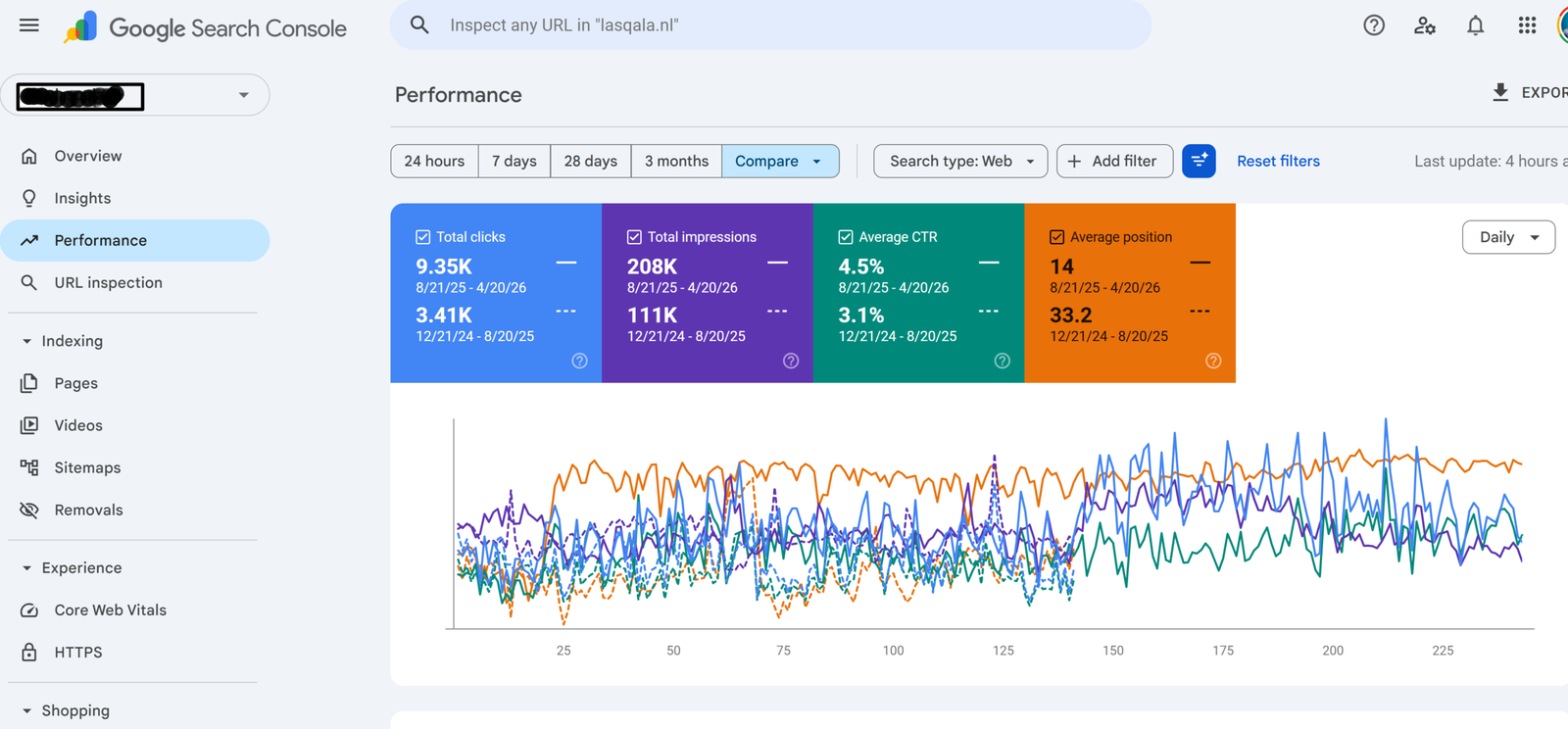
- A 1.9K clicks over 6 months means the site is now consistently sending real, measurable visitors to the website through organic search — traffic the business was not capturing or tracking before.
- A 29.1K impressions shows the site is now appearing in search results at meaningful volume, which is the top of the funnel that click growth depends on.
- A 6.5% average CTR is a healthy result — well above the roughly 2–3% CTR typical of listings sitting outside the top few organic positions — indicating the on-page titles and descriptions are compelling searchers to click through, not just appear.
- A 12.6 average position means the site is landing, on average, at the bottom of page 1 to the top of page 2 for its tracked queries — a realistic, competitive position for a local restaurant six months into a campaign, and a strong base to keep pushing toward the top of page 1.
Business Impact
- More website visitors: 1.9K organic clicks represent 1.9K real opportunities for someone to view the menu, hours, or location — visits the business wasn’t capturing through search before.
- Increased phone calls and inquiries: for restaurants, a meaningful share of organic visits translate into calls or direction requests, particularly from mobile “near me” searches, which a 12.6 average position and rising impressions both support.
- More qualified visitors: people arriving via specific, intent-driven searches (cuisine, dish, or location terms) tend to convert into diners at a higher rate than passive traffic.
- Stronger local visibility: appearing consistently across 29.1K impressions builds repeated brand exposure with local searchers, even among the people who don’t click on any given search.
- Improved brand authority: consistently ranking around page 1–2 signals credibility to both diners and to Google, compounding future ranking gains.
Giovanni
USA
Service Provided
SEO, Local SEO, Multilingual SEO , On-Page SEO, Technical SEO.
Project Timeline
6 Month
Client Review
Before working with Saad, we had no real idea how our website was performing in search — we just had a nice-looking site sitting there. Within six months, we started seeing real traffic and visibility we'd never had before, and it's kept growing since. Saad was straightforward, easy to communicate with, and clearly knew what he was doing on the technical side without ever making it feel overcomplicated. Highly recommend him if you want an SEO partner who actually shows you the numbers.